Sunday, April 8, 2012

Like a Rabbit on a Leash


'Tis the season for cherry blossoms. It's called Hanami in Japan, which basically translates to "sit under a bunch of trees and eat a picnic." If you go to the big parks, you will see large groups of friends and families bbq-ing together and just enjoy being outside, camped out under the pretty trees.


In honor of Easter, it seems fitting to post that while we were walking around, we saw a couple with a rabbit on a harness leash.


We thought a paddleboat would be a fun activity.


The fun ended when the paddleboat jammed and we could no longer peddle. We had to naturally crash-land into the "coast" on the lake and crawl ashore (while a really confused couple secured the swan paddleboat for us). I am pretty sure that the people relaxing by the water thought we didn't understand how to operate a paddleboat. It was a dramatic rescue that resulted in us sitting with the boat, like a rabbit on a leash, until the paddleboat operators came and hauled it away.

Anthony Bourdain goes to Mozambique!

So I am really excited to watch the No Reservations episode on the Travel Channel! On Monday, April 9th, they are showing Mozambique and Mozambican food! It looks like he goes to Maputo and the fish market there, Beira and Nampula. In this video, he is on Ilha de Mocambique, which was close to where I lived in Nampula. Nampula, represent!

Saturday, March 17, 2012

A Bad Back

So a couple of weeks ago, I had a great Saturday. I got so much accomplished with cleaning and laundry. I went to bed feeling smug and satisfied with my homemaker self. However, it was when I woke up on Sunday, that all of my satisfaction came crashing down. I couldn't move. Any time I tried to move to get up off my bed, I was met with tear-inducing pain. In the past, I have had some back pains as a result of sleeping on the floor, where most Japanese beds are. However, this time, as a result of sleeping on my thin futon mattress on the ground and sleeping in contorted positions that would impress the cast of Cirque du Soleil, I had really done it this time. My back is no longer as springy and agile as it used to be.

My mind immediately rushed back to when I visited the doctor before coming to Japan and had to get a chest x-ray that was necessary for medical clearance for entrance into my job. The doctor looked at my spine and said that I had the spine of a 40-year old woman, not a 26-year old. I blasted myself for not having consumed that bottle of vitamins the size of horse pills. I eventually rolled over and rocked myself until I staggered into a semi-straight standing position. Panicked, I did what any normal 28-year old woman would do. I called my mommy and daddy. They gave advice to put some heat on it. Since I didn't have any heating pads, my mom asked if I had any rice and to seal the uncooked rice in a cloth and microwave it for a minute or two and place it against my back. It totally does the trick, by the way. I tried explaining this makeshift heating pad to the school nurse and her facial expression was a mixture of horror and polite confusion.

I eventually went to the hospital and had them check it out. I got medication but it was only for 30 hours and I knew it was something that would just need to work itself out. I ended up being floor-ridden for about a week and that was no fun. You would think that endless hours of watching every old TV show and movie would be exciting (hello Mighty Ducks, the Cosby Show and Polly (the 1989 film) - I was on a Keisha Knight-Pulliam bender). But I can tell you that it is not. I have always really liked my coworkers but they were especially kind during that week. I am a pretty lucky gal and I appreciated their help. They dropped by with food, did a pharmacy run for me and checked in on me. I am extremely fortunate to work with such wonderful, kind people.

Sunday, February 19, 2012

Fun, Germs and Studying Zeal

Everyone on the island seems to have the flu so the face masks are out in full force. I don't wear one because I like to think that since everyone else is wearing one, that frees up all the clean air for me. Flawed, I know. This line of thinking has worked out so far (find me a piece of wood to knock on, stat!). But I can't help but recoil every time I am within a ten foot radius of a child who sneezes or coughs without covering their mouths and then I have to sing the "Hello Song" with them. The "Hello Song" consists of marching around the room with about 12 first-graders and singing/yelling "Hello, hello, hello, what's your name? Hello, hello, hello!" At this point, you have to find the nearest person and say "My name is Ayami. My name is Erin." And then you shake hands as the music goes "hello, hello, hello" and you find your next partner/flu victim. In the last class, I told them that we were going to play a fun game where we pretend to shake hands but do not touch each other. Also, at the end of class, they all want to give me high fives. Afterward, I race to the antibacterial hand spray and practically hold it up in the air to shower under it to decontaminate, like some horrible lab experiment gone wrong.

With the high school students, it is just more difficult to understand them with a mask covering their mouths. A lot of the students wear masks as a form of prevention. It seems like the third year students, who are in the midst of heavy studying for university exams, are in isolation in a room in a separate wing of the school. I am sure that it's a very crazy time for them with exams. In Japan, the system for graduating students is much different than the system for American kids. American kids apply to three or four universities and then when they go to university, they have a vague idea of what they want to do and then actually decide their sophomore year. In Japan, they begin asking what you want to do with your life when you are in seventh grade and by the time you enter high school, you must know whether you want to go to university or not. If you decide to go, you enter the "alpha" class, which has a more rigorous study schedule than the "beta" class. And you cannot change your mind once you enter the "beta" class. You cannot take the exams for universities. Do not pass go. Do not collect $200. Their choices at 16 years of age are all a bit too permanent for my taste.

Thursday, February 9, 2012

Parado

Visiting my old students in Mozambique during this last holiday season really opened my eyes more than ever to the wonderful opportunities I have had because I was born in the United States. My students are entering 12th grade this year and they are already thinking of what they will be able to do once they graduate from school. They all have dreams of becoming doctors, nurses, engineers or activists, but the question that constantly lingers in their minds is whether they and their families will be able to afford to go to university or a technical school. Some people say that this is the problem everywhere. But it is much worse and a much more complicated problem in Mozambique, where there are few jobs for high school graduates, few scholarships properly distributed and no such thing as a student loan.

Although many students have difficult stories and circumstances, one student really has my attention. Fabião is currently 20 years old and just graduated from high school in Monapo, the town in Nampula where I was a Peace Corps volunteer from 2008-2009. My roommate was his teacher but I grew close to him as he would come over to practice using my computer. The oldest of six siblings, Fabião is soft-spoken and always has a quick smile. I don’t think he has a mean bone in his body. He and his family are humble and kind.

In the two years after I left Monapo, his older brother passed away and as the next oldest son, he began working to help support his large family. During the 12th grade, he switched courses so that he could study at night. Studying at night in Mozambique isn’t always easy, because often, the level of instruction falls because teachers and students often don’t show up for classes. While going to school at night, he began working at a banana farm some 20 km away from Monapo during the day. Every morning, he woke up at 3:30 and got on a company truck to go collect bananas in the hot sun for 11-12 hours. He returned home at around 4 or 5 pm to bathe and have a short rest before going to school from 6:30 until 11:00 pm. After school, he would return home to get a little sleep before having to wake up early again to repeat the same process the next day.

He has graduated now, despite the struggle that stood in his way for getting his high school education, but like most others in town, he does not have the money or the opportunities to go to school. So he continues to work at the banana farm, collecting bananas every day and hoping to save enough money to one day be able to go to school in the city to study English. If he were to go to school, he would also leave Monapo, leaving his family without the income from his job on the banana farm.

Fabião is kind and intelligent and I have been thinking about him a lot. He deserves better opportunities than what he has in front of him, as do so many of our old students who have graduated from Monapo but now remain “parado” - stopped. He and the others students are why I want to go into development and education as a career. Time and time again, visiting with old students, the frustration of limited opportunities and resources was evident. Only a select few with money and connections are able to study when there is so much intelligence, creativity and potential in these young people.

Thursday, January 12, 2012

Matando Saudades in Moz

In Portuguese, to say that you miss or have a deep longing for something, you say "tenho saudades." Saudades is one of those foreign words that doesn't quite translate perfectly to English. Here are pictures of my trip to Mozambique from December 19th to January 7th, where I had a chance to "matar saudades" - kill my longings for Mozambique. Sounds dramatic, right? I visited Maputo City and Namaacha (along the Swaziland border) in the south and Nacala, Ilha and Monapo in the north. I had a wonderful time visiting old friends and students. I apologize in advance for these photos not being in any specific order.


The art market in Maputo. You can find some really great stuff here but bring your A-game in negotiating. The vendors used to be on the streets but the city moved them to this really nice park.


This woman made really cool dolls out of capulana material. I couldn't help but buy one.


Maputo city


Me, hanging out with me and my roommate's former students in Monapo


Me with Fabiao, possibly one of the kindest and soft-spoken people on the face of the earth


The sewing master at the back of the market in Monapo. He made me two dresses and a skirt during my stay in Monapo. He used to make clothes for the first volunteers in Monapo and still has old fashion magazines they gave him.


Some of the dress examples he has on the wall. He said that he has made every kind in the pictures.


The Monapo market during a busy time.


Chamussa, a dog left by Megan, the last health volunteer in Monapo, watching everyone play basketball in the local gym. I met him once and as I walked up to the house of the new volunteers in Monapo, he came sprinting up to me to be petted. He is much calmer than Timba ever was.


Playing basketball with kids in Monapo and the new volunteers, Leah and Ariel.


The fortaleza on Ilha de Mocambique. This used to be the capital of the country and was led by the Portuguese. This is also a point for the shipment of slaves from Mozambique to foreign countries.


Walking around the fortaleza. It is an eery and empty fort, full of history.


The view of the beach next to the fort.


Me at the fortaleza on Ilha de Mocambique.


These little girls assumed that I didn't understand any Macua. Au contraire, little girls. I understand you when you call me an ugly white person. I turned around and said "n'sheni?" - "what did you say?" I never got so much joy out of a shocked and ashamed expression on someone's face before.


Castro with Ismael. Ismael was one of my best students in Monapo. He hated when he earned a score any less than perfection. He can converse really well in English and I think that if given the right opportunities, he will have a very bright future. He is full of opinions and never afraid to give them.


Fermino, one of my roommate's really sweet students, grilling the chicken.


Me, sitting and chatting with Ismael and Líle.


Castro, Assane and Fermino as we hung out in Monapo, making dinner one night.


One of my best students, Raimundo, and his cousin in Nacala. He is incredibly intelligent and hopes to study science in Nampula after graduation.


A Nacala sunset.


Some of the best and cheapest food in Mozambique is bar food. This plate of fish with rice and a potato sauce only cost about $3! Nothing tastes better after a long day of walking around in the sun and the heat.


A child taking a break at the Monapo chapa stop to fix his toy car. Kids in Mozambique are incredibly creative in making toys for themselves.


Timba is alive! He's alive! And he's bigger and more muscular and probably would have ripped my hand off if I had stuck my hand there. He didn't remember me but that's okay because he is thriving at the house of Monapo's priests, except for the fact that he has penchant for biting priests rather than thieves. He has now bitten two different priests because they were bothering him.


Women carrying water in Monapo.


Assane, my roommate's former student, working as a volunteer at Monapo's local radio station.


A giant form of mancala being played in the market while vendors wait for customers.


Beautiful nampula. Rock formations that look like they have just dropped from the sky.


Me with Eulalia, one of my students during my time in Monapo in 2007-2009. She is now 17 years old and she is going to be entering 12th grade later this month. She wants to work in the health field after she graduates.


Ugh, hello chapa (the main, sardines-in-a-can, form of transportation in Mozambique). We meet again.


The beautiful new international terminal at the Maputo airport. The Chinese are helping renovate the entire airport and are currently working on the domestic terminal.


The outside of a chapa waiting to fill before it can leave.


Me and my host family. Since I stayed with them four years ago, they have had 5 more Peace Corps volunteers come to stay with them and my host father is a chefe with Peace Corps in Namaacha in helping coordinate the housing of trainees.


I ate a meal at three different houses on Christmas Day and the food was delicious. Preparation of food for special events is a loooong process.


Walking to see the infamous, beautiful mountains of Namaacha.


A funny woman who saw us walking past and wanted her picture taken with me.


Castro and I


Castro and the mountains. Waaaay out in the mountains behind him is the family's "machamba." A machamba is where people plant their vegetables and crops and it is often far away from the family home and requires a lot of work.


Visiting Dona Olimpia, the host mom of my Peace Corps friend, Angie.


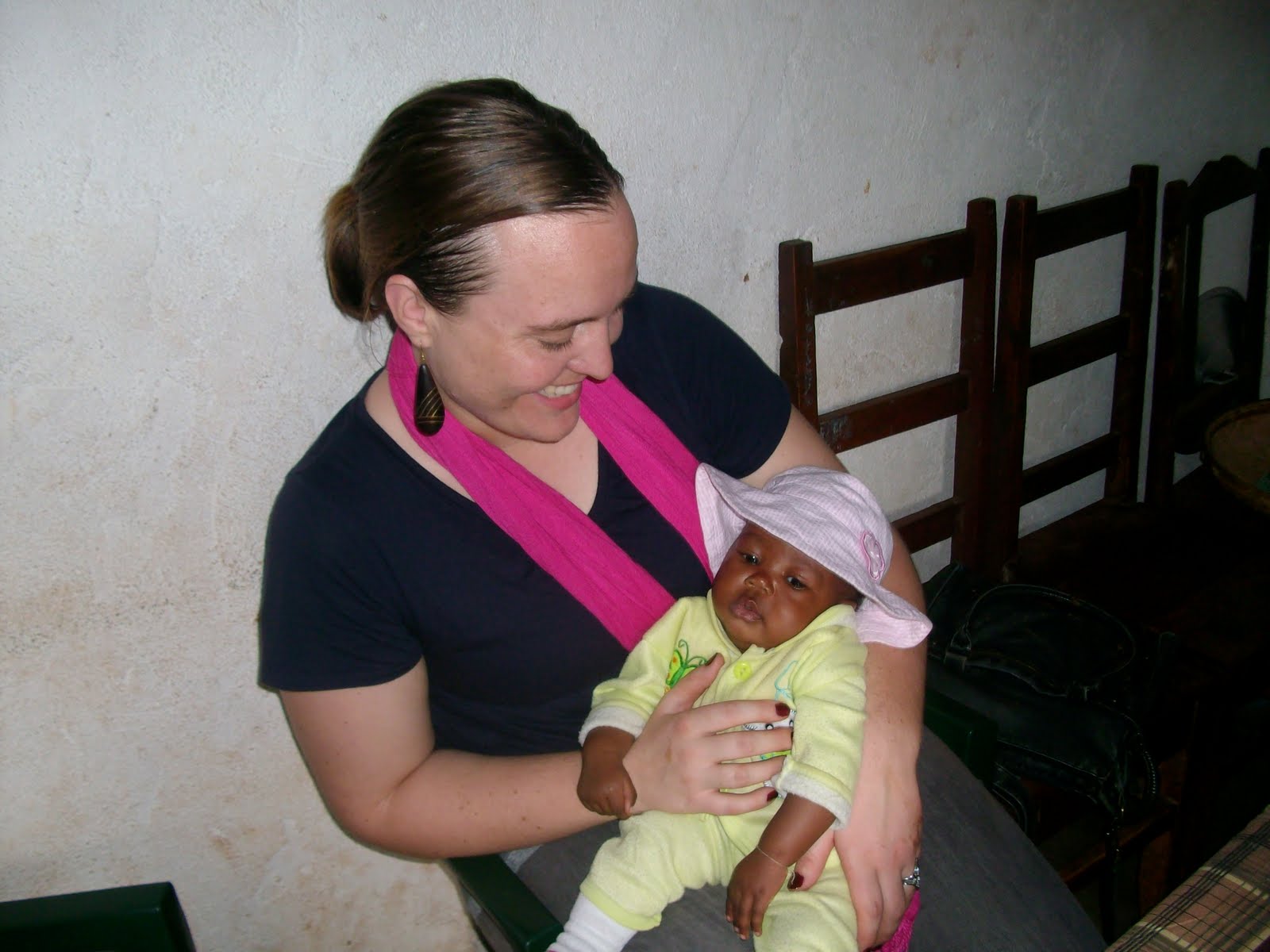
Holding Becky, named after a Peace Corps volunteer, Castro's niece.


Castro picking lychees on his mother's kitchen roof, the most delicious fruit in the world.


I got to Namaacha at prime lychee time.


Making matapa - a large pilao for pounding the leaves.


Aninha making batatas fritas (french fries) over charcoal.


Celeste, my host mother's niece's foster daughter. It's a difficult family web to untangle sometimes. She is such a sweet and curious little girl.


Me and Aninha, one of my host sisters with a wonderful sense of humor. She is now 17 years old and will be studying 9th grade starting later this month. She wants to be a doctor one day. She is constantly singing and I told her that she will need to moonlight as a DJ as well once she becomes a doctor.


Me with Pedo, my young host brother and a neighbor and my other host sister with babies. Nelinha, on the left, is holding her niece, Jazy, and Atalia, my host sister, is holding my host mother's great niece, Joyce.


Maputo city, looking good.